

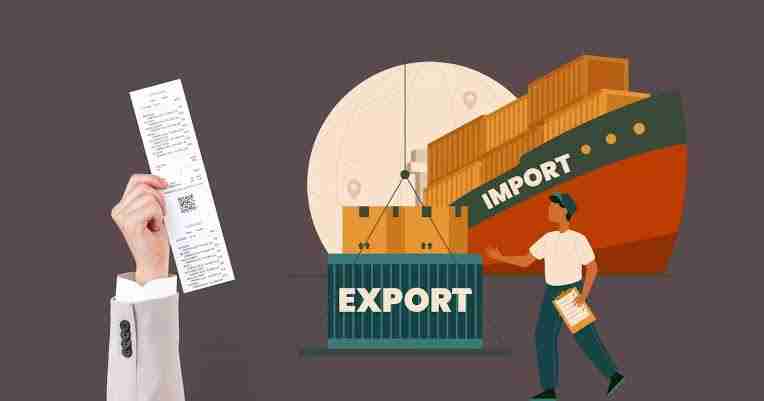
“Export tax in China” can refer to three different compliance questions: whether an export duty applies to the goods, how the transaction is treated for Chinese VAT, and whether the goods are restricted or controlled for export. These questions must be reviewed separately.
China does not impose one universal tax on all exports. Many goods are not subject to export duty, while certain products appear in the annual customs tariff with an export tariff rate. Separately, an eligible export may receive VAT refund or exemption treatment, remain VAT-exempt without a refund, or be taxed as a domestic sale.
The result depends on the product classification, customs commodity code, exporting taxpayer, purchase documentation, transaction structure, destination, export date and current policy. Export-control licensing is another legal layer and is not determined solely by whether export duty or VAT applies.
What can “export tax in China” mean?
| Compliance area | What it determines | Primary authority | Main verification point |
|---|---|---|---|
| Export duty | Whether customs duty is charged when particular goods leave China | China Customs and the State Council Tariff Commission | Current customs code and annual export tariff schedule |
| Export VAT treatment | Whether the export receives refund or exemption treatment or remains taxable | State Taxation Administration and the competent tax authority | Exporter status, goods, invoices, customs declaration and tax records |
| Export control or licensing | Whether the goods, software or technology can be exported and whether a licence is required | Ministry of Commerce, Customs and other competent authorities | Control lists, technical specifications, end user, end use and destination |
| Destination-country charges | Taxes and duties imposed when the goods enter another jurisdiction | Destination-country customs and tax authorities | Importer, customs value, origin and local tariff classification |
China export duty should not be confused with duties and import VAT collected by the destination country. Incoterms and the sales contract may determine which party bears particular costs, but contractual allocation does not change the underlying obligations imposed by customs or tax law.
Export duties versus export VAT treatment
Export duty
Export duty is a customs charge imposed on goods included in China’s applicable export tariff schedule. Under the PRC Tariff Law, the exporter or consignor is the taxpayer for export goods, and the applicable tariff item and rate are determined through the official customs tariff.
The 2026 Customs Import and Export Tariff took effect on January 1, 2026. Its export tariff table identifies the goods to which export duty applies. Businesses should check the version effective on the relevant export date because tariff codes, descriptions and rates can change.
Export VAT
Export VAT rules determine the treatment of VAT associated with exported goods. Under the VAT framework effective from January 1, 2026, export transactions may fall into one of three broad categories:
- VAT refund or exemption treatment;
- VAT exemption without an input VAT refund; or
- VAT taxation under rules comparable to a domestic sale.
Zero-rated or refund treatment does not mean there was no VAT in the supply chain. The China exporter may have paid input VAT when buying materials, goods or services. The export VAT mechanism determines whether qualifying input VAT can be credited or refunded and how any non-refundable amount is treated.
For general information about domestic VAT invoices, input credits and fapiao controls, see HROne’s China VAT and fapiao guide. The wider relationship among VAT, corporate income tax, customs and other taxes is covered in the China taxation system guide.

How to determine whether export duty applies
The exporter should not determine duty exposure from an English product name or supplier description alone. A customs assessment should address:
- What are the goods? Confirm material composition, function, production method, technical specifications and intended use.
- What is the correct customs classification? Identify the current customs commodity code rather than relying on a code used for a different market.
- Does the code appear in the applicable export tariff? Check the official schedule effective on the export date.
- Does a temporary or special measure apply? Review current tariff announcements and product-specific measures.
- Who is the exporter or consignor? Confirm the China entity responsible for the declaration and any duty payment.
- Does the declared value follow customs rules? Ensure that the contract, invoice, declaration and payment structure are consistent.
Where product classification is uncertain or commercially material, obtain a written classification assessment from a qualified customs professional. A past clearance does not necessarily prove that the code remains correct for future exports.
HS-code and product-classification risk
The HS code influences more than export duty. It may affect the export VAT rebate rate, licence requirements, statistical reporting and customs review. An incorrect code can therefore cause several problems at once.
Classification should be supported by objective product information, including:
- product name and model;
- materials and composition;
- technical specifications;
- function and application;
- manufacturing process where relevant;
- catalogues, photographs or technical drawings; and
- laboratory or testing information where classification depends on composition.
Do not choose a code because it produces a lower duty or higher VAT rebate. Where goods within one shipment have different classifications or rebate rates, they should be declared, accounted for and reported separately as required. Under the 2026 export VAT policy, business subject to different rebate rates that is not separately declared and accounted for may be subject to the lower applicable rebate rate.
Export VAT refund and exemption concepts
The 2026 export VAT and consumption-tax policy states that goods generally need to satisfy four conditions for refund or exemption treatment: they must be sold to an overseas entity or individual, declared to customs and physically leave China, recorded as a sale under the accounting rules, and satisfy the applicable export-proceeds collection requirements.
Specific exceptions, deemed-export categories and special structures have additional rules. A shipment leaving China is therefore not, by itself, enough to establish a VAT refund entitlement.
Exemption-credit-refund method
The exemption-credit-refund method generally applies to qualifying exports by production enterprises and certain other specified transactions. VAT is exempted at the export stage. Related input VAT first offsets applicable VAT payable, and a qualifying remaining amount may be refunded.
Exemption-refund method
The exemption-refund method generally applies to qualifying exports of purchased goods by foreign-trade enterprises and other covered entities. The export is exempted from output VAT, while qualifying input VAT may be refunded according to the applicable calculation and rebate rate.
Exemption without a refund
Some exports are VAT-exempt but do not permit the related input VAT to be credited or refunded. The relevant input VAT must generally be transferred to cost. This treatment can apply because of the exporter’s status, the product category, the available purchase document or another condition in the export policy.
Taxable export transactions
Certain transactions are not eligible for either refund or exemption treatment and must be treated as taxable. Examples under the 2026 policy include goods for which export refund treatment has been cancelled and transactions involving false business activity, invalid documents or prohibited nominal-export structures.
The rebate rate is determined through the current export rebate-rate database and may not always equal the VAT rate applied to the underlying purchase. If the rebate rate is lower than the applicable VAT rate, the calculated difference is included in export cost.
Exporter-of-record and documentation responsibilities
“Exporter of record” is a useful commercial expression, but the China compliance analysis should identify the actual export consignor, customs declarant and taxpayer under the relevant rules.
A China consignor may declare goods directly or appoint a registered customs broker. Using a broker does not remove the consignor’s responsibility to provide complete and accurate transaction and product information. The customs broker must also review the information supplied under the applicable declaration rules.
For VAT purposes, the eligible claimant depends on whether the goods are exported directly or through a properly documented agency arrangement. A foreign buyer does not receive a Chinese export VAT rebate merely because it purchases goods from China. The claimant must be the qualifying China taxpayer under the applicable export structure.
Contracts should identify:
- the China seller and exporting entity;
- the overseas buyer;
- the party issuing the commercial and VAT invoices;
- the party making the customs declaration;
- the party receiving the export proceeds;
- the party bearing freight, insurance and customs expenses; and
- the party responsible for returns, product claims and refund adjustments.
A mismatch among the contract, fapiao, customs declaration, bill of lading, bank receipt and accounting ledger can delay or prevent an export VAT refund.
Customs declarations, invoices and supporting records
The precise file depends on the product and transaction, but an export compliance record may include:
- sales and purchase contracts;
- commercial invoices and packing lists;
- valid purchase VAT fapiao or other accepted purchase evidence;
- export customs declarations;
- bills of lading, air waybills or other transport records;
- export-proceeds collection records and bank records;
- agency-export agreements and agency-export certificates;
- product specifications and classification support;
- inspection, quarantine or licence documents where applicable;
- accounting records showing export sales; and
- export VAT filing forms and calculation workpapers.
Under STA Announcement No. 5 of 2026, a taxpayer must complete export refund or exemption registration when first filing for export treatment or requesting a relevant certificate. Changes to registered information generally must be filed with the competent tax authority within 30 days.
The 2026 rules permit filing through the unified electronic tax bureau, the standard China International Trade Single Window or the approved offline export-refund filing tool. Even where documents are submitted electronically, the taxpayer must retain the supporting records.
Export controls and restricted goods
Export duty and VAT treatment do not determine whether goods are legally exportable. A product may have no export duty and still require an export licence or export-control authorization.
The review may need to cover:
- the annual export-licence goods catalogue;
- the PRC Dual-Use Items Export Control List;
- the 2026 dual-use import and export licensing catalogue;
- temporary product-specific controls;
- sanctioned or controlled end users;
- the stated and reasonably foreseeable end use;
- the destination and transshipment route; and
- technology, software or technical data supplied with the goods.
HS-code screening alone is not sufficient for export-control review. Dual-use classifications often depend on technical performance or specifications. Controls may also apply to an unlisted item where the exporter knows or should know that a controlled end use or other statutory risk exists.
Export-control review should occur before accepting the order, receiving payment or arranging shipment. A licence requirement discovered after goods reach the port can interrupt delivery and create contractual disputes.
Practical export compliance workflow
- Map the transaction. Identify the China seller, exporter, overseas buyer, customs broker, payment recipient and VAT claimant.
- Classify the goods. Confirm the customs code using technical and product evidence.
- Check export duty. Review the 2026 tariff and any later product-specific adjustment.
- Screen export controls. Review licences, control lists, end user, end use and destination.
- Determine VAT treatment. Confirm whether the transaction qualifies for refund or exemption, exemption only, or taxable treatment.
- Confirm the rebate rate. Use the current official rebate-rate database for the declared code and export date.
- Align documents before shipment. Reconcile contracts, invoices, declarations, transport records and payment terms.
- Complete customs and tax filings. Use qualified customs and tax professionals with clear responsibility for corrections.
- Retain evidence. Preserve the classification file, customs documents, VAT records, licences and payment support.
- Review changes. Recheck annual tariffs, rebate rates and control lists before later shipments.
Common export-tax mistakes
- Assuming every export is subject to duty.
- Assuming every shipment leaving China qualifies for a VAT refund.
- Using the destination country’s HS code without checking China’s classification.
- Treating VAT exemption and VAT refund as the same result.
- Assuming a zero-rated export guarantees a cash refund equal to all input VAT.
- Using one code for products with materially different functions or specifications.
- Allowing contract, customs, invoice and bank data to describe different transactions.
- Exporting in one entity’s name while another party controls the transaction and bears the commercial risk.
- Checking export controls only after the goods are ready to ship.
- Assuming a customs broker assumes every legal and tax responsibility.
When customs or tax advice is required
Obtain customs advice where classification, customs value, export duty, licensing, origin, bonded processing or product restrictions are uncertain. Obtain tax advice where the exporter, VAT claimant, rebate rate, purchase documentation, collection of export proceeds or the direct-versus-agency export structure is unclear.
Trade-compliance advice is especially important for dual-use goods, advanced materials, electronics, chemicals, encryption, aviation, aerospace, energy, manufacturing equipment and products supplied to sensitive end users or destinations.
HROne does not file customs declarations, determine export duty, obtain export VAT rebates or manage export-control licences. An Employer of Record also does not become the exporter or assume these obligations simply because it employs sourcing, sales or logistics personnel.
Where a company has its own China entity and employees supporting export operations, HROne’s China payroll outsourcing service can support payroll calculation, IIT withholding and employment-related administration. Customs and export-tax matters must remain with qualified customs brokers, tax professionals and trade-compliance advisers.
Frequently asked questions
Are all goods exported from China subject to export duty?
No. Export duty applies to goods covered by the applicable export tariff. The current customs code and annual tariff schedule must be checked for each product.
How can a company find the China export-duty rate?
First confirm the China customs classification. Then check that code against the current Customs Import and Export Tariff and any subsequent tariff or product-specific announcements. Do not rely on a supplier’s estimate or a tariff database for another country.
Does zero-rated export VAT mean the exporter receives all VAT back?
No. The calculation depends on the applicable refund method, qualifying input VAT, official rebate rate and supporting records. If the rebate rate is lower than the applicable VAT rate, part of the VAT may become an export cost.
Can a foreign buyer claim China’s export VAT rebate?
Not merely because it bought goods from China. The refund claimant must be the qualifying China taxpayer under the applicable direct or agency export arrangement.
Can a sourcing agent claim the rebate on behalf of the supplier?
That depends on the legal and tax structure. The parties must distinguish a genuine purchase-and-resale export from an agency-export arrangement and complete the corresponding contracts, customs declarations, invoices and agency certificates.
Is export-control screening the same as checking the HS code?
No. The HS code is relevant, but export controls can depend on technical specifications, end user, end use, destination and separate control-list classifications.
Can an EOR handle export tax and customs compliance?
No. An EOR provides an employment structure for qualifying employees. It does not become the seller, exporter, customs declarant or VAT refund claimant and does not replace customs, tax or export-control advisers.
Conclusion
Export tax in China is not one charge or one percentage. A compliant analysis separates export duty, VAT refund or exemption treatment, and export-control requirements.
Before shipping, identify the actual exporting entity, classify the goods, check the current tariff, determine VAT treatment, verify the rebate rate, review licensing and align the commercial, customs, transport, payment and accounting records. Material decisions should be reviewed by qualified China customs, tax and trade-compliance professionals.
This article provides general information and does not constitute customs, tax, legal or export-control advice. Product classification, rates, policy eligibility and documentation requirements should be confirmed for the specific goods and export date.

