

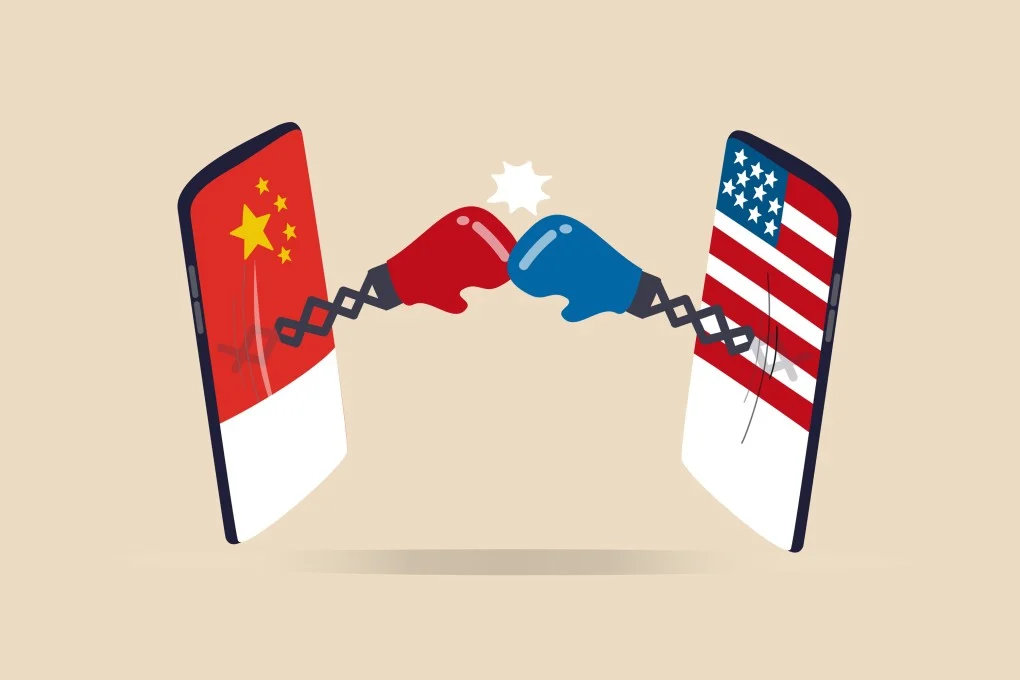
The China–US tax treaty helps determine how certain cross-border income should be taxed when a company or individual has connections to both countries.
Its purpose is to allocate taxing rights, limit certain source-country taxes, and provide mechanisms for relieving double taxation. It does not make cross-border income automatically tax-free.
For businesses, the main treaty questions concern permanent establishments, business profits, dividends, interest, royalties, and cross-border services.
For individuals, the treaty is particularly relevant to employment income, independent professional services, pensions, teaching, research, students, and foreign tax credits.
The official China–US income tax treaty was signed in 1984 and became effective in 1987. The IRS also maintains a current China tax treaty documents page containing the treaty and its technical explanation.
What Does the China–US Tax Treaty Do?
The treaty establishes rules for deciding:
- Which country may tax a particular category of income
- When business profits become taxable in the other country
- Whether a reduced withholding-tax rate applies
- When short-term employment income may qualify for exemption
- How tax paid in one country may be credited in the other
- How disputes involving double taxation may be addressed
Treaty eligibility must be assessed separately for each taxpayer and income category.
A company cannot assume that every payment between China and the United States qualifies. An individual cannot assume that spending fewer than 183 days in China automatically removes all Chinese tax obligations.
What the Treaty Does Not Cover
The China–US treaty is an income tax agreement. It does not replace:
- Chinese payroll calculations and filings
- Employment contracts
- Social insurance or housing-fund requirements
- U.S. tax-return obligations
- Immigration and work-permit rules
- Corporate registration or business licences
- Transfer-pricing documentation
- Every domestic tax or administrative charge
The treaty is not a social-security totalization agreement. It therefore does not coordinate Chinese social insurance and U.S. Social Security in the way that a separate totalization agreement would.
Employers should continue to follow the monthly processes in HROne’s China payroll guide, even when an employee may qualify for treaty treatment.
Who Can Claim Treaty Benefits?
The treaty generally applies to residents of China, the United States, or both countries under its residence rules.
Before claiming a benefit, establish:
- The taxpayer’s treaty residence
- The type and source of income
- The treaty article covering that income
- Whether the recipient is the beneficial owner, when relevant
- Whether the income is connected to a permanent establishment
- Whether the required forms and supporting evidence are available
For dividends, interest, and royalties, a recipient acting only as a conduit may not qualify as the beneficial owner.
The file supporting a treaty claim may include:
- A valid tax-residence certificate
- Employment, service, loan, or licence agreements
- Invoices and payment records
- Travel and presence-day records
- Ownership and organizational documents
- Evidence of business substance
- Payroll and tax-withholding records
- An explanation of the treaty article being applied
Treaty relief should be supported before the tax position is taken—not reconstructed only after a tax authority raises questions.
When Is a U.S. Company Taxable in China?
The central business concept is the permanent establishment, commonly called a PE.
Under the treaty, the business profits of a U.S. enterprise are generally taxable only in the United States unless the enterprise conducts business in China through a Chinese PE. If a PE exists, China may tax the profits attributable to it.
A PE may arise from circumstances such as:
- An office, branch, factory, or workshop
- Certain construction or installation projects
- Supervisory activities connected to qualifying projects
- Service or consultancy activities exceeding the treaty threshold
- Certain agents acting for the foreign enterprise
Under the treaty, furnishing services—including consultancy services—may create a PE when activities for the same or a connected project continue for more than six months within a twelve-month period.
A company should not assume that having no Chinese subsidiary means it has no Chinese corporate tax exposure. Employees or consultants who repeatedly perform services, negotiate contracts, manage projects, or support customers in China can create a PE question.
For the wider domestic framework, see HROne’s guide to the China taxation system.
How Are Dividends, Interest, and Royalties Treated?
The treaty generally limits source-country tax on qualifying dividends, interest, and royalties to 10% of the gross amount when the recipient is the beneficial owner and the other treaty conditions are satisfied.
| Income | General treaty limit | Important checks |
|---|---|---|
| Dividends | 10% | Residence, beneficial ownership, shareholding and distribution records |
| Interest | 10% | Loan terms, lender status, beneficial ownership and transfer pricing |
| Royalties | 10% | IP ownership, licence scope, payment classification and beneficial ownership |
The 10% rate is a ceiling under the treaty, not an automatic result.
The company must confirm:
- Whether the payment has been classified correctly
- Whether domestic law offers a lower rate
- Whether the recipient qualifies as the beneficial owner
- Whether the income is connected with a PE
- Whether the required Chinese procedures have been completed
For example, a payment described as a management or technology service may actually include a royalty element. The tax analysis should follow the substance of the transaction, not merely the wording on the invoice.
The China–US Treaty’s 183-Day Employment Rule
Employment income from work performed in China may generally be taxed in China.
However, the treaty may prevent China from taxing the employment income if all three of the following conditions are met:
- The employee is present in China for no more than 183 days during the relevant calendar year.
- The remuneration is paid by, or on behalf of, an employer that is not resident in China.
- The remuneration is not borne by a permanent establishment or fixed base that the employer has in China.
Every condition must be satisfied.
The exemption may fail if:
- The employee exceeds the treaty’s presence threshold
- A Chinese entity economically bears or recharges the salary cost
- The foreign employer has a Chinese PE that bears the remuneration
- The facts show that the Chinese organization is the employee’s economic employer
China’s State Taxation Administration provides additional guidance on treaty benefits for employment income.
Do Not Confuse Two Different 183-Day Rules
China’s domestic 183-day residence test and the treaty’s short-term employment test serve different purposes.
The domestic rule helps determine whether a non-domiciled individual is a Chinese tax resident for a tax year. The treaty rule determines whether employment income from work exercised in China may qualify for a specific exemption.
An individual can therefore require analysis under both rules.
The State Taxation Administration’s guidance on tax residence in China explains the domestic residence test and the related six-year rule.
Do U.S. Citizens Working in China Still File U.S. Tax Returns?
Generally, yes.
The treaty includes a saving clause that preserves the United States’ right to tax its citizens and residents under U.S. domestic law, subject to specific exceptions.
A U.S. citizen working in China may consequently have:
- Chinese individual income tax exposure
- Chinese payroll and withholding obligations
- A U.S. federal tax-return requirement
- Foreign financial-account reporting obligations
- A potential foreign tax credit or foreign earned income exclusion
- Employer tax-equalization or tax-protection calculations
Treaty relief and foreign tax credits can reduce double taxation, but they do not ordinarily eliminate U.S. filing obligations.
The IRS explains the general operation of treaty saving clauses in its guidance on how tax treaties affect income tax.
Foreign Tax Credits and Double-Tax Relief
Double-tax relief does not always mean that one country completely exempts the income.
Relief may take three forms:
- Treaty exemption: One country gives up its right to tax qualifying income.
- Reduced withholding: The source country taxes the payment at a treaty-limited rate.
- Foreign tax credit: Both countries may tax the income, but one allows credit for qualifying tax paid to the other.
Article 22 of the treaty addresses the elimination of double taxation.
Foreign tax credits are normally subject to domestic limitations, classifications, documentation requirements, and filing deadlines. A taxpayer may not necessarily receive a dollar-for-dollar credit for every foreign payment described as a tax.
Does Treaty Relief Replace China Payroll Withholding?
No.
A treaty position may affect whether employment income is taxable, but employers still need a controlled process for:
- Determining employee tax residence
- Recording China presence days
- Identifying where services were performed
- Confirming which entity paid and bore the salary
- Applying any treaty exemption
- Calculating taxable compensation
- Filing and remitting individual income tax
- Retaining supporting documentation
- Correcting the calculation if the facts change
If an employee initially expects to remain below a treaty threshold but later exceeds it, the employer may need to recalculate and report the tax position.
HROne’s China expat payroll and IIT compliance guide explains the operational controls required for foreign employees.
Companies that already have a Chinese entity can use China payroll outsourcing to coordinate payroll calculations, IIT withholding, filings, payslips, and employee records.
A Practical Treaty Review Process
Before applying the treaty, follow this order:
- Identify the taxpayer and confirm treaty residence.
- Classify the income correctly.
- Determine where the income arose.
- Select the applicable treaty article.
- Check every condition under that article.
- Review permanent-establishment and beneficial-ownership questions.
- Compare the treaty result with domestic law.
- Complete the required filing or withholding process.
- Retain supporting documents.
- Reassess the position if the facts change.
For employee cases, tax, payroll, immigration, and employment documentation should tell the same story.
Frequently Asked Questions
Does the China–US tax treaty eliminate double taxation?
It can reduce or relieve double taxation, but not in every case. Relief may arise through an exemption, a reduced source-country rate, or a foreign tax credit.
Can a U.S. company avoid Chinese corporate income tax?
Its business profits may be protected from Chinese taxation when it has no Chinese permanent establishment. The company’s facilities, personnel, projects, agents, contract activities, and time spent providing services must be reviewed.
Is income tax-free if an employee spends fewer than 183 days in China?
Not automatically. The employee must satisfy the presence, non-resident-employer, and cost-bearing conditions in the treaty’s employment article.
What is the treaty rate for dividends, interest, and royalties?
The treaty generally limits source-country tax to 10% when the recipient is the beneficial owner and all applicable requirements are met.
Does the treaty eliminate U.S. filing for Americans in China?
Generally, no. The saving clause usually preserves U.S. taxation of citizens, although foreign tax credits and other domestic provisions may provide relief.
Does the treaty cover Chinese social insurance or U.S. Social Security?
No. It is an income tax treaty, not a social-security totalization agreement.
Final Takeaway
The China–US tax treaty is most useful when the correct article is applied to a clearly documented transaction or employment arrangement.
Businesses should examine permanent establishment, payment classification, beneficial ownership, withholding, and documentation. Individuals and employers should distinguish the treaty employment exemption from China’s domestic residence rules and continue to manage payroll compliance.
For support aligning China payroll and IIT withholding with your employment structure, contact HROne.
Disclaimer: This article provides general information and does not constitute legal, tax, accounting, payroll, or compliance advice. Treaty treatment depends on the taxpayer’s residence, income, activities, documentation, and current administrative practice. Obtain qualified professional advice before claiming treaty benefits.

