

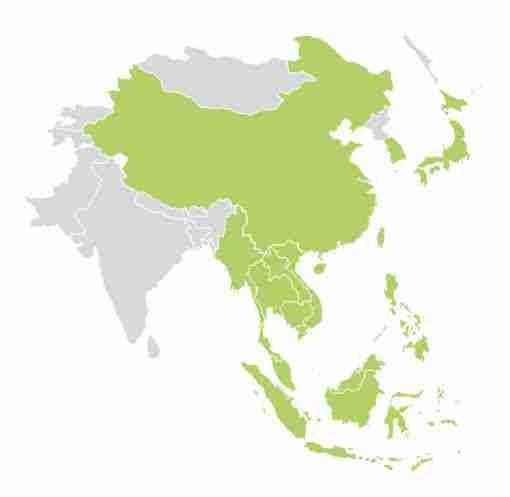
There is no universally best EOR model for APAC market expansion. The right choice depends on the countries in scope, expected headcount, hiring sequence, operating duration, required visibility over the legal employer and whether the company intends to establish local entities. A direct in-country provider may be strongest for one strategic market; a partner network may simplify several small launches; a hybrid model may balance local depth and regional coordination; and the employer’s own entity may be more appropriate for a large, permanent operation.
The decision should be made country by country before it is consolidated into a regional procurement strategy. The provider’s brand, contract and interface do not by themselves reveal which entity employs each worker or who performs payroll and employee-relations work locally.
APAC EOR Model Decision Table
| Business situation | Model generally worth assessing first | Main reason | Control question |
|---|---|---|---|
| One strategic market | Direct in-country EOR provider | Creates a short line between the client, legal employer and local operating team. | Does the provider itself operate the employing entity and employment process? |
| Several APAC markets with limited initial headcount | Partner network or hybrid model | May offer one regional contract, interface and account-management route. | Which markets are direct, which use partners and who is accountable for each? |
| Initial market testing | Direct, network or hybrid EOR | A temporary employment structure can support limited hiring before an entity decision. | What event or date will trigger a review of the structure? |
| Long-term, high-headcount operation | Employer’s own local entity | May provide greater control over employment, infrastructure and commercial operations. | Does the forecast justify entity setup and ongoing local administration? |
| Direct legal-employer visibility is a priority | Direct in-country EOR provider | The buyer contracts closer to the entity employing the worker. | What is the legal employer’s full registered name and responsibility? |
| One regional contract and interface is the priority | Partner network or hybrid model | Central coordination can reduce regional vendor-management work. | Do the central service levels bind the in-country delivery chain? |
This table is a screening tool, not a substitute for country review. A company may reasonably use different models across APAC.
The Four Operating Choices
Direct in-country EOR provider
A direct in-country provider operates the local employing entity and normally performs the local employment work through its own team. This can give the buyer clearer access to the entity signing the employment contract, the people running payroll and the specialists handling employee issues.
Direct delivery does not automatically make a provider suitable. The buyer must still assess registrations, country and city coverage, operational capacity, technology, financial controls, data handling and the service agreement. If separate direct providers are used across several markets, the employer also needs its own regional governance for reporting, calendars, escalation and vendor management.
Global EOR using local partner networks
In a partner-network model, the regional or global vendor manages the client relationship while an in-country organization supplies the legal employer or local operations. This can provide broad coverage through one commercial relationship, but it creates an additional contractual and operational layer.
The buyer should know the local partner before onboarding, not only after an incident occurs. Confirm who signs the employee contract, processes payroll, holds employee data, answers local questions and carries out termination. The regional vendor should also explain how its service commitments apply to the partner and what happens if that partner changes.
Hybrid EOR model
A hybrid provider uses its own employing entities in some markets and partners in others. This can combine direct coverage in core markets with wider geographic reach, but the client experience may differ by country. A single interface does not mean that the employment structure, payroll controls or escalation route are identical everywhere.
Request a country matrix showing the delivery model for every target jurisdiction. The RFP response and contract should disclose any later change from direct delivery to a partner, or from one partner to another, and identify the approval, notice and transition process.
Employer’s own local entity
Establishing an entity moves legal employment and local administration to the company’s own organization. It may fit sustained headcount, long-term operations, local management infrastructure or activities requiring broader local corporate capacity. It also requires incorporation, banking, tax, accounting, payroll, HR administration and ongoing governance.
An entity should not be chosen solely because headcount reaches an arbitrary number. Compare projected EOR cost and operating constraints against the complete cost, timeline and management burden of establishing and maintaining the entity in that particular country.
Start With a Country-by-Country Operating Map
Before comparing provider proposals, document the proposed hires for each market:
- role, seniority, nationality and actual work location;
- planned start date, contract duration and expected headcount growth;
- salary, bonus, commission, allowances, equity and benefits;
- working hours, overtime, leave, travel and expense arrangements;
- authority to negotiate, sign contracts, invoice customers or manage local funds;
- immigration or work-authorization needs;
- systems and employee information accessed across borders; and
- expected date for an entity, acquisition, closure or provider transition.
This map lets providers price and assess the same facts. It also exposes cases that require separate tax, immigration, licensing or corporate advice. An EOR arrangement supports employment; it does not automatically authorize the client’s commercial activity in a market.

Verify the Legal Employer and Delivery Chain
For each country, obtain the legal employer’s registered name, address and role. Ask whether the client contracts with that entity directly, whether another provider sits between them and which agreement controls local delivery. The answer should be consistent across the proposal, service agreement, employee contract, payroll funding instructions and privacy documents.
A responsibility matrix should identify who:
- reviews the proposed role and employment model;
- prepares, approves and signs employment documents;
- collects and validates employee information;
- runs payroll and makes required tax or statutory submissions;
- supports leave, performance and employee-relations matters;
- approves and communicates employment changes;
- reviews resignations, terminations and final payroll; and
- owns escalation when the regional vendor and local provider disagree.
Do not accept “our platform handles it” as an ownership answer. Technology can route a task, but a named entity and team must perform the underlying employment work. The separate EOR platform evaluation guide explains how to review the technology and legal-employer layers together.
Compare Employment, Payroll and Employee Support
Contracts and local HR administration
Ask each provider for a country-specific onboarding checklist and sample employment document. Confirm who localizes mandatory terms, policies and employee notices; how non-standard compensation is approved; and how contract amendments are issued. A regional template can provide consistency, but it must not override local mandatory requirements.
Payroll, withholding and statutory benefits
The proposal should describe payroll cutoffs, input templates, calculation review, client approval, funding, payment, payslips, statutory reporting and correction procedures. Request sample employee-level and consolidated reports. For every market, identify which entity receives funds, pays salary, performs withholding and retains filing evidence.
Compare the treatment of bonuses, commissions, expenses, equity events, retroactive changes and off-cycle payments. A provider that quotes one regional payroll process should still explain country-specific exceptions.
Termination and employee relations
Employment disputes rarely follow a standard software workflow. Confirm access to local-language employee support, the review required before a manager communicates a warning or exit, and who evaluates notice, evidence, protected status, final pay and severance. Regional service levels should state who owns the case until it is resolved, including where a local partner performs the work.
Compare the Full Commercial Model
A monthly EOR fee is only one cost component. Require an itemized schedule covering:
- setup and onboarding fees;
- monthly minimums and volume tiers;
- security deposits or payroll reserves;
- statutory employer costs and supplementary benefits;
- foreign-exchange source, spread and settlement date;
- international transfer or banking fees;
- bonus, commission and off-cycle payroll charges;
- contract amendments and non-standard HR support;
- immigration services, if available;
- termination, severance administration and final payroll fees; and
- provider-transition and data-export charges.
Compare a realistic first-year and exit scenario for each country rather than multiplying the headline monthly fee by headcount. The contract should also address late funding, deposit return, disputed invoices and changes imposed by an in-country partner.
Review Data Access and Regional Governance
Multi-country EOR arrangements move identity, banking, compensation, tax, benefits, attendance and performance information among employees, legal employers, local operators and regional teams. The RFP should map each recipient and system rather than relying on a generic security statement.
Confirm role-based permissions, audit trails, data location, cross-border access, subprocessors, retention, incident notification, employee-rights requests and deletion or return at exit. Ask whether a regional administrator can see all employee records by default and whether access can be restricted by country, entity, employee group and data type.
A common interface can improve reporting, but the buyer should test whether data fields have the same meaning in every market. Payroll approval status, gross pay, employer cost, leave balance and termination date may reflect different local processes.
Plan the Exit Before Selecting the Provider
An APAC rollout may later move to another EOR, several local specialists or the employer’s own entities. The service agreement should therefore cover notice, employee communication, cooperation duties, data export, document delivery, payroll reconciliation, deposit return and continued access after termination.
Moving employees to the company’s entity is not simply a payroll migration. Depending on the country and facts, the transition may require employee agreement, new employment documents, termination and rehire steps, recognition of service, final settlement, benefit changes, statutory registration and controlled transfer of records. Ask providers to describe the process without promising that one method works across all APAC markets.
China Within an APAC EOR Strategy
HROne is the China specialist within this APAC discussion. HROne should not be described as directly providing EOR employment across every Asia-Pacific country. A regional employer may engage HROne for mainland China while using direct providers, a global network or its own entities elsewhere.
For China, verify the exact entity signing the labor contract and the cities in which payroll and statutory administration can be supported. The PRC Labor Contract Law establishes the written-contract framework and mandatory contract subjects. The Individual Income Tax Law, Social Insurance Law and Housing Provident Fund Management Regulations support separate payroll, withholding and statutory-administration workstreams. Local contribution settings and procedures require city-specific confirmation.
China employee information also requires review under the Personal Information Protection Law, particularly when regional teams or systems access the data overseas. The client and provider should document data roles, purposes, access, transfers, retention and security.
Employers needing the broader employment-model analysis can use HROne’s China EOR guide. The China workstream should then be integrated into the regional governance calendar without assuming that another APAC market follows the same rules.
APAC EOR Provider RFP Checklist
| RFP area | Required response or evidence |
|---|---|
| Country coverage | Country list showing direct entity, named partner or unsupported market. |
| Legal employer | Registered employing-entity name and relationship to the contracting provider. |
| Local operations | Team location, languages, employee-support route and escalation ownership. |
| Employment process | Sample contract, onboarding checklist, amendment workflow and termination review. |
| Payroll | Calendar, input file, calculation report, approval record, funding process and correction policy. |
| Statutory administration | Country-specific responsibility for withholding, benefits, filings and evidence. |
| Service levels | Response and resolution commitments that apply to local partners as well as the lead vendor. |
| Pricing | Itemized fees, deposits, exchange-rate method, extras and exit costs. |
| Data | System map, permissions, subprocessors, transfers, retention, incidents and export format. |
| Transition | Provider-change and client-entity conversion plan, cooperation duties and fees. |
Implementation Checklist
- Approve the country, role, headcount and hiring sequence.
- Confirm whether each worker is an employee and whether EOR fits the proposed duties.
- Record the legal employer and direct, partner or hybrid delivery model for every market.
- Reconcile the service agreement, employee terms and responsibility matrix.
- Approve country-level cost estimates, deposits, funding dates and foreign-exchange rules.
- Set payroll calendars, approvers, correction routes and employee-support contacts.
- Complete immigration and work-authorization review where relevant.
- Approve employee-data notices, access permissions and cross-border transfer controls.
- Train managers on changes that require local review before communication.
- Set review dates for headcount, service performance, provider transition and entity conversion.
Frequently Asked Questions
Is a direct EOR always better than a partner network?
No. Direct delivery may provide clearer legal-employer visibility, while a partner network may offer broader coverage and centralized procurement. The better choice depends on the countries, service controls and operating priorities.
Can one EOR model cover every APAC market?
A single contract or interface may cover several markets, but the legal employer and delivery structure can still differ by country. Review each market separately.
What is a hybrid EOR model?
A hybrid provider uses its own employing entities in some countries and local partners in others. Buyers should obtain a country-level delivery map and change-notification terms.
How can an employer verify the local legal employer?
Request the entity’s registered name and address, sample employee contract, payroll funding route and written explanation of its relationship with the lead provider.
When should employees move from EOR to a local entity?
Review the change when headcount, duration, local management needs, commercial activity, cost or control requirements make an owned entity more appropriate. The transition method requires country-specific review.
China Support Within a Regional Expansion Plan
For employers whose APAC plan includes mainland China, HROne’s China EOR service can be assessed as the China-specific employment workstream. Request the employing-entity details, supported city, payroll calendar, statutory-cost estimate, data process and transition terms for the proposed hires. HROne’s China EOR pricing page provides a starting point for an itemized proposal.

